Home
My Story
The Path to Seva
My Blog
About Jan
Books
Essays

Jan DeBlieu

Home
My Story
The Path to Seva
My Blog
About Jan
Books
Essays

Even doing laundry was fun with P. Billy Howard photo

Losing P.

She was beautiful in a healthy, all American way, and fashionably dressed, and, it seemed to me, absolutely comfortable with who she was. She was smiling and warm and accepting and funny, so, so funny, always up for anything. She could be in smelly fishing clothes and, five minutes later, beautifully coiffed as if for a fancy ball. I never figured out how she did that. At moments I wondered if she had an identical twin.

            We met in Atlanta when we were both in our 20s. She was dating a photographer Jeff worked with, and the four of us became pals. We were all newly in jobs that let us feel like adults but without the kinds of responsibilities—houses, kids—that would have made us real grown-ups. We rented beautiful apartments in old Atlanta. We had enough spending cash to regularly go out on the town, in a section of the city with lots of young people like us.  This lasted for several years, until we more or less grew out of it. I’ve often wondered how those days and weeks slipped through our hands.

            P. came to see us shortly after Jeff and I had moved to the Outer Banks. There was no question but that we would stay in touch. She completely charmed the rough-and-tumble fishermen in our tiny Hatteras Island village. They didn’t know what to make of her: a well dressed city gal who was nice and could chat them up. She went happily back to Atlanta, laughing and waving at us as she boarded the plane.

Home by ourselves again, Jeff and I looked at the photographs we’d taken. P. was incredibly photogenic; she knew how to shine through the camera’s lens. “Just think of how much you love the person taking the picture,” she’d told me, more than once. Great advice, but I’d also need to lose my self consciousness, of which she seemed to have zero. Yet behind the smiling persona, she was thoughtful and deeply spiritual. Much of our friendship was based on our conversations about God.

            In time P. moved to the South Carolina to marry a man who shrimped with his brother for some of the year and also built and remodeled houses. We stayed in touch. Of course we did. But we didn’t see each other often. When Reid was about six, we visited P. and her husband and met her own three girls, two of whom were twins. Her life seemed a bit idyllic, cozy as she was on a tidal river with a shrimp boat docked out back. She was still quirky and fun, but solidly grown now. And Jeff and I were too.

            We didn’t see each other again before our move to Maine. Twenty years had passed. There are any number of ways to lose people in this world: inattention, indecision, misinterpretation of each other’s actions. There was none of the latter in my and P’s friendship. We were just living far apart, and busy. We knew the bond between us was lasting. But even the strongest bonds can wither if not tended.

One day after we’d settled into our home here, P. got in touch. As we chatted on the phone, she said she wanted to come visit.

            “Please come!” I said. And she did.

            We talked and talked during the days she was here, about our lives, our kids, our husbands, our hopes. Sitting on our porch one afternoon, looking up the small hill to the little patch of white pines and sumacs in back, I thought about how we’d each matured and changed—how life had changed us. We’d lost a son. She’d lost a close woman friend—not to death, but to personal beliefs. The friend had come out. She’d married another woman. P’s subsequent decision to cut off ties with her had shocked us. I’d wanted to talk with her about it but didn’t quite know how. Sitting on the porch that afternoon, I decided it needed to be aired. “Why?” I asked. “You guys were so close.”

            P. shrugged. “She’s gay. It’s against what God wants for us.”

            “But it’s C.”

            She looked at me, shrugged, and looked out toward the trees, her expression sad but resolute.

            I sat staring into the chasm that suddenly yawned between us. Neither of us spoke. But it’s P.! my heart screamed.

            Ever so carefully, I let out a breath. I sat for a few beats more. Then I leaned toward her. “Love you, P.”

            She grabbed my hand and squeezed, hard.

            We told ourselves we would keep in touch, and we did, a bit. There were some Christmas cards and occasional hellos here and there. I wonder now why we didn’t do more. We both truly meant to; I’m sure of it. It was my turn to visit her in South Carolina. When would be a good time? We batted around some dates but couldn’t settle on anything. The years slipped by.

            One Sunday morning a few weeks ago, P. was on her way to church with one of her daughters and her two-year-old granddaughter. I imagine her busily getting ready, taking care of multiple tasks at once, watching the clock so as not to be late. I imagine her parking the car and hustling across the street to the church, staying within the marked crosswalk. I dearly hope she didn’t see the truck before it hit her.

            Now when I talk to her, I know she hears me. There is no chasm between us; we dispensed with that while she was still in this world. I know for certain sure, as my mother used to say, that P. now knows more about God than I do.

Now when I talk to her, it’s with a sense of awe. You’re there, P., where we always knew you would be. Give Reid a hug from me, and my brother, and my parents—all my loved ones. And give me a nudge—please!—if you ever think there’s something I should know.
PostedMay 13, 2026
AuthorJan DeBlieu
CommentPost a comment

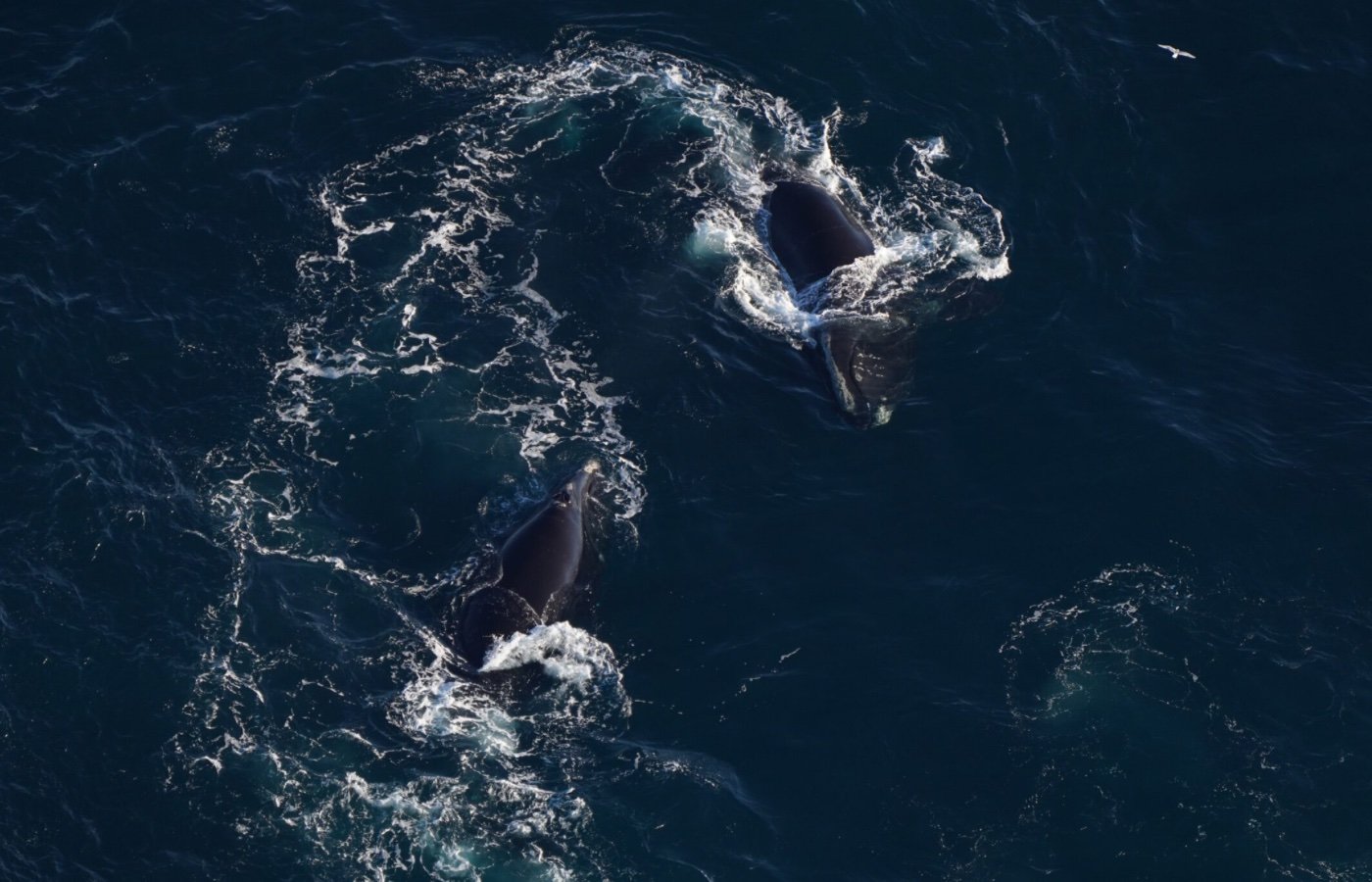
New England Aquarium photo, January 2025

A Congregation of Whales

One January day last year, in cold Atlantic waters over a rocky ledge off the Maine-New Hampshire border, the ocean surface was broken by the dark backs of whales—an astounding number of them, perhaps 70 or more, though they were difficult to count. North Atlantic right whales, among the most endangered creatures on Earth. 
            They had been drawn to the area, scientists surmised, by a prolific population of a copepod, a rich oceanic plankton on which they feed. To find so many of these whales so closely together was highly unusual. For weeks they gathered near the seamount known as Jeffreys Ledge. Lobster boat crews removed some of the lined buoys for their traps from the water column to reduce the chance that whales would become tangled in them. 
            North Atlantic right whales winter off New England and the Canadian Atlantic provinces but migrate to southern waters for calving. At one time they were so populous that their oil lit the houses of New England and well beyond. They were indeed the “right” species for whaling ships to target. Hunting them has long been outlawed, but ship strikes and entanglement in fishing gear have helped pushed the species perilously close to extinction. In 2024 only 384 North Atlantic right whales were known to be alive, far too low for the population to be stable.
            And now here were 70 or possibly swimming together, in numbers researchers had never seen. 

Read more …
PostedApril 9, 2026
AuthorJan DeBlieu
CommentPost a comment

The Golden Ball

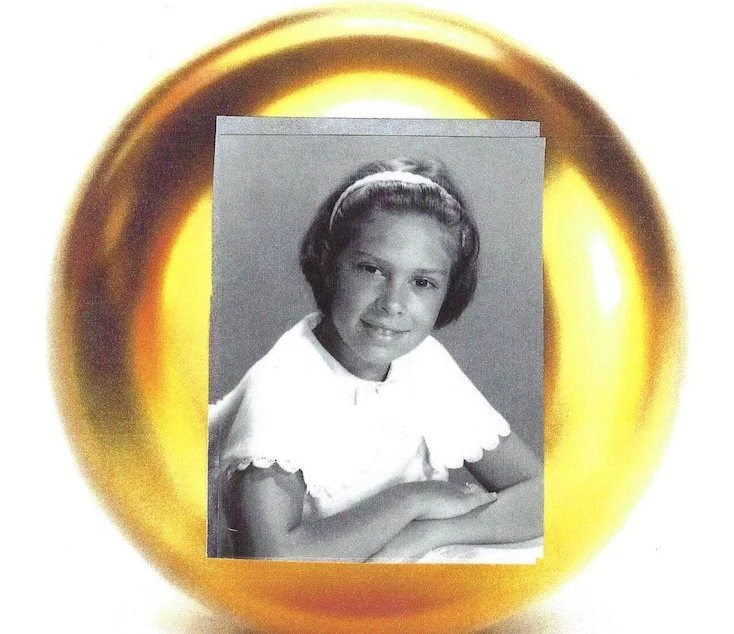
A little girl in our extended family is in third grade this year, stirring up deep feelings in me. How did she get so big? It’s wonderful how much she’s grown and learned. Even so, I find myself fervently wishing that I could protect her from the perils of this world.

You see, third grade was when I lost the golden ball.

In Iron John: A Book about Men, the poet Robert Bly writes of the innocence of a young boy as symbolized by a golden ball. The boy plays with this ball, enjoys it—and one day loses it. I’m summarizing wildly here, but you get the idea.

I first heard of Bly’s work when we were newly married and living in Atlanta. Jeff was reading a copy of Iron John and finding it deeply meaningful. “It explains so much!” he said, talking about Bly’s golden ball theory.

“Wait a sec,” I said. What made him think girls don’t go through something similar?

He looked a little sheepish, my feminist guy. Well, he admitted, it’s possible they do. But Bly was writing from a strictly male perspective. “Maybe it’s different for girls,” Jeff said. “Maybe there isn’t a single moment when it happens.”

So I told him my story.

Read more …
PostedFebruary 24, 2026
AuthorJan DeBlieu
CommentPost a comment

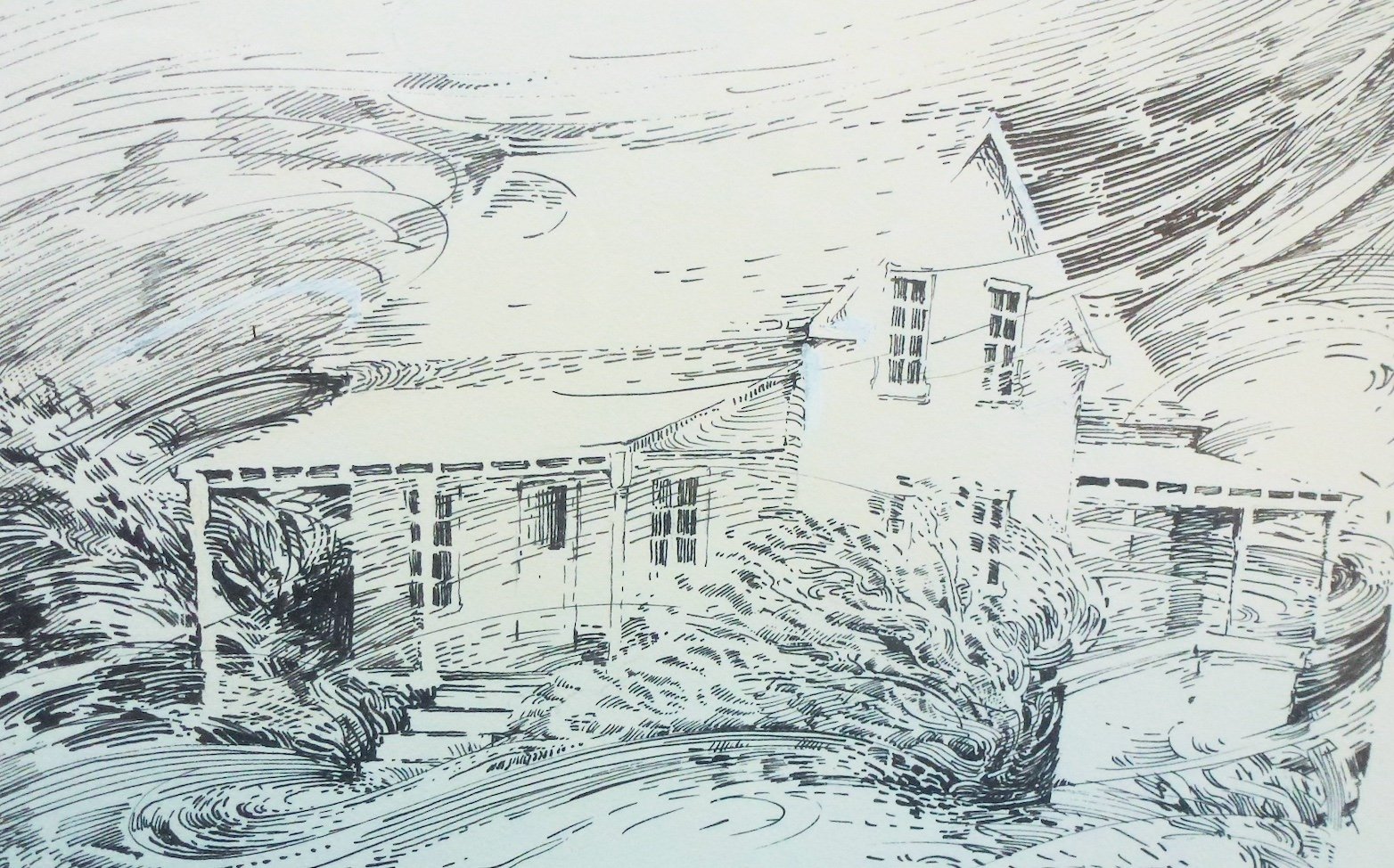
Remembering Rodanthe

The morning light in our living room was sweet and clear, although the windows through which it poured were thickly coated with salt. Jeff and I sat looking at each other across the room, trying to come to terms.

            “This is what we both want,” he insisted. And indeed, it was.

            “This” was to stay right where we were, in our little wind-beaten rental house on fragile Hatteras Island. For 18 months we’d been living in the village of Rodanthe, just south of the wide, unspoiled beaches of the Pea Island National Wildlife Refuge. We’d moved to Hatteras so I could write a book, my first. Now the book was finished, but I was having trouble moving on. We’d just learned that this house was being put up for sale. It could be ours.

            There is so much to love about Hatteras Island and the rest of the Outer Banks: the long, sandy beaches, the marshes filled with birds. The lovely blue-green surf. The storms, which redraw the islands’ contours and serve as a constant reminder of who’s in charge (not us). I’ve never felt so close to nature as during my time on Hatteras.

But there is also much to fear in a landscape designed to wander and remake itself. If you were to imagine living on the back of a writhing dragon, you wouldn’t be far from the truth.

Read more …
PostedDecember 3, 2025
AuthorJan DeBlieu
CommentPost a comment

Tantrums for Peace--Once More

I’ve noticed recently that folks have been grouchier than usual—not just people I know, but the population in general. Fewer people are smiling, and often they seem impatient. These are not what I’d call the best of times.

I’ve been feeling it a bit myself—more tense, more irritable, something like the housewife in the old, “Mother please! I’d rather do it myself!” Anacin TV commercials. I was a kid when those came out, and my older brother and I used to tease our mother mercilessly about them. In time I came to feel a nearly boundless empathy for the woman stirring the soup that perhaps needed a little more salt.

Fortunately, years ago I stumbled on a sure-fire mood lifter for when my own pot threatens to boil over:

I retreat to a corner or a room where I’m alone and can move completely freely—nothing close by that I might hit. And then I begin to rage.

With my feet wide apart, often a little bent over, I clench my fists and swing my arms up and down in frustration, silently screaming why why why?, or whatever phrase best captures the complaint of the moment. This is generally interlaced with words that would have spurred my mother to wash out my mouth with soap. All of this is in silence (except on the very worst days—and even then, only when no one’s around).

It takes about 45 seconds before my anger and energy are spent, though it can seem much longer. Utterly worn out, I flop into a chair. Am I finished? Can I get up, go out, and face the world with equanimity? No? I rage again until I can.

I stumbled on the value of these solitary tantrums years ago, when my mom was still alive. Much of the caring for her fell on me, even though I lived seven hours away.

Read more …
PostedAugust 28, 2025
AuthorJan DeBlieu
CommentPost a comment
Newer / Older

Contact Subscribe to My Blog

Copyright 2020 Jan DeBlieu. All Rights Reserved.